Cost per full serving: make the denominator earn its place
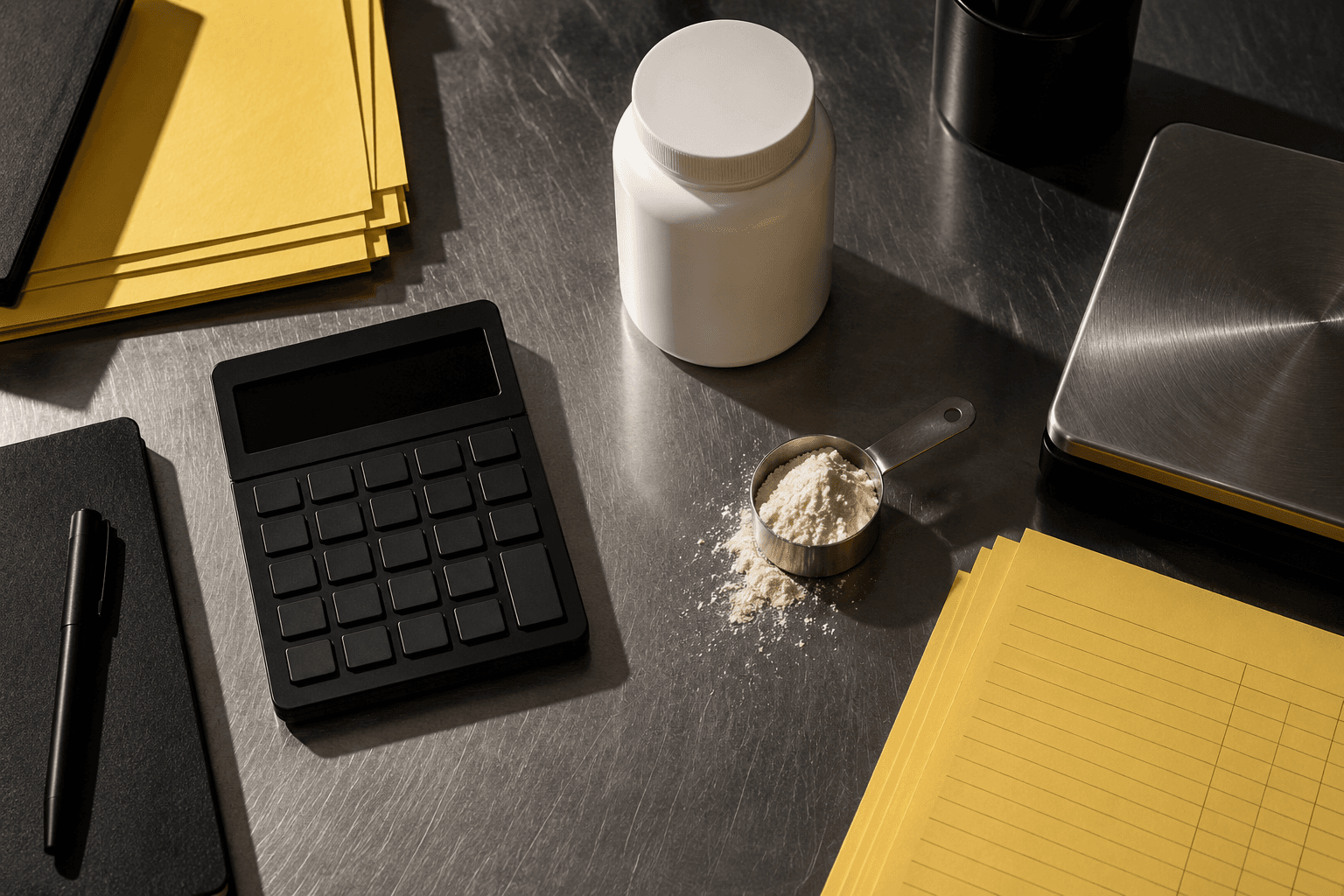
A bottle price is only half of a useful value comparison. The other half is what that bottle supplies under a clearly identified serving basis. Thirty capsules, thirty label servings, and thirty days can be different quantities. This guide keeps the comparison tied to the label rather than a shopping headline.
The worksheet divides the total purchase cost by full servings from your inputs. It does not recommend a daily amount or treat two formulas as equivalent. Its result is an arithmetic aid for quotes you have actually collected.
Start with the complete payment
Enter the quoted price for one container, the number of containers, and the shipping and tax for the entire purchase. Do not enter a shipping charge per container unless that is how it has actually been quoted. Leave no discount implicit: use the price that will be charged after the offer you can use.
Blank shipping and tax are treated as zero, which is an assumption visible below the worksheet. A result made with those blanks is not a verified delivered total. Fill in the checkout charges when they are known, then save or download the new version.
Choose one quantity unit
If the label states servings per container, use that field directly. If you are comparing units such as capsules, enter the units per container and units per label serving. For powder, use grams for both fields. Do not mix milligrams in one field with grams in the other.
The worksheet counts full servings separately in each container and shows the remainder. For example, 100 units at three units per label serving gives 33 complete servings and one unit left in that container. Remainders are not pooled between containers in this tool; the rule is shown so the result is reproducible.
Keep labels and personal use separate
The label serving is a comparison unit, not an instruction from this website about how much you should take. If your clinician gives different instructions, do not assume the label-based cost is a cost per day. Our worksheet deliberately does not estimate days of treatment.
Two products can have different ingredients, amounts, forms, and purposes while both producing a cost-per-serving number. The number should accompany the preparation details. Pin the records in the database and read what is still missing before treating the lower division result as a complete recommendation.
Before the next purchase.
- What exactly is one full label serving?
- Which charges are missing from this quote?
- Am I comparing the same preparation and unit?
Source record
Public pages checked October 3, 2026. This is a source-based review, not a test purchase, taste test, certification audit, or clinician review. Published prices may change.